1. À quoi allez-vous l'utiliser ?
Commencez par réfléchir à ce que vous attendez de la plaque. Posez-vous la question :
- Ai-je besoin que ce soit très fort?
- Est-ce nécessaire ? très léger?
- Est-ce que les gens le verront (donc il faut que) avoir l'air bien)?
- Vais-je couper ou percer il?
- Est-ce que prix important?
Vos réponses nous aideront à orienter votre choix.
2. Choisissez la bonne épaisseur
Les plaques en fibre de carbone existent en de nombreuses épaisseurs, comme 0,5 mm, 1 mm, 2 mm, 3 mm, 5 mm, et plus encore.
- Plaques minces (0,5 mm–1,5 mm)Léger et flexible, idéal pour la décoration, les revêtements ou les couvertures légères.
- Plaques moyennes (2 mm–3 mm)Solide et léger, idéal pour les drones, les pièces de radiocommande, les châssis, etc.
- plaques épaisses (4 mm à 5 mm ou plus)Très résistant, idéal pour les pièces structurelles, les robots, les outils ou les machines.
👉 ConseilPour les drones, une épaisseur de 2 ou 3 mm est très courante. Pour des applications structurelles, il faut utiliser une épaisseur supérieure.
3. Choisissez le bon look (style de tissage)
La plupart des plaques en fibre de carbone présentent une surface tissée. Les deux motifs les plus courants sont :
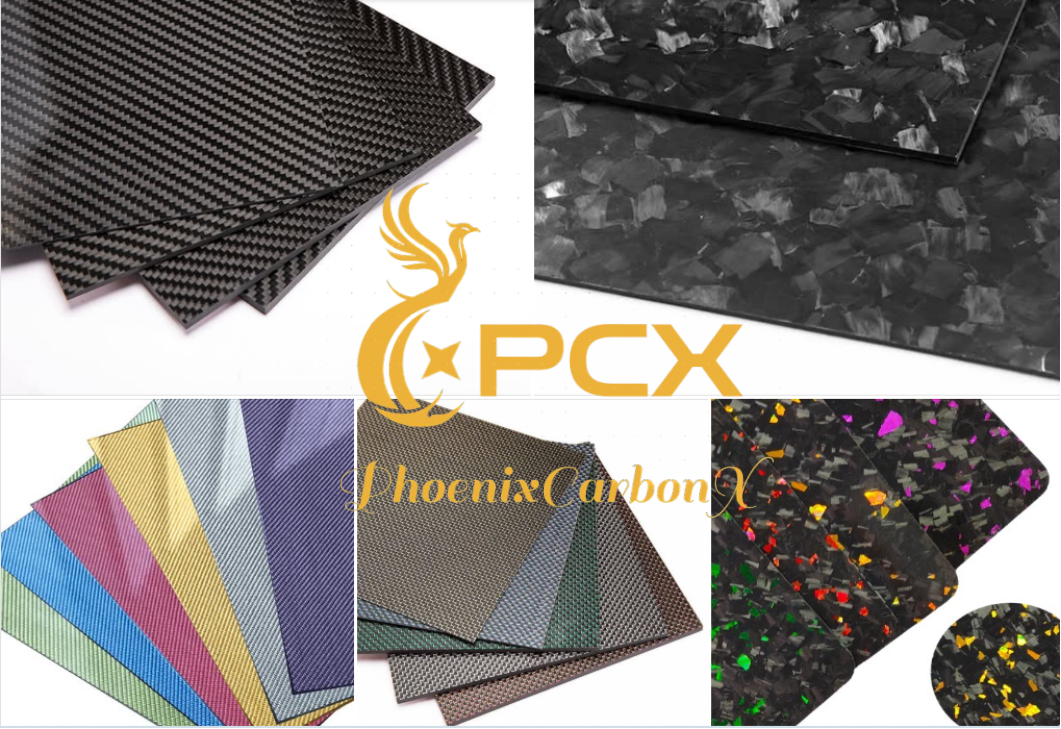
- Tissage sergéMotif diagonal, lisse et brillant, pour un look tendance. Idéal pour les parties visibles.
- Tissage uniMotif simple superposé, un peu plus rigide, moins brillant.
👉 ConseilSi l'apparence compte pour vous, optez pour tissage sergé. Sinon, tissage simple Ça va.
4. Assiettes pleines vs. assiettes à sandwich
- Plaque en fibre de carbone solideEntièrement fabriqué en fibre de carbone. Très résistant et rigide.
- Assiette à sandwichIl est composé d'une partie supérieure et inférieure en fibre de carbone, mais d'un autre matériau (comme de la mousse ou du plastique) au milieu. Plus léger, moins cher, mais moins résistant.
👉 ConseilPour une résistance élevée, choisissez solide plaques. Pour un poids léger et un faible coût, sandwich Les assiettes peuvent faire l'affaire.
5. Découpe et perçage
La plupart des plaques en fibre de carbone peuvent être coupé ou percé, mais les plaques plus épaisses nécessitent des outils plus robustes. Utilisez outils en carbure ou en diamant Si possible, portez un masque — la poussière est nocive pour vos poumons.
👉 ConseilSi vous n'avez pas les outils adéquats, demandez-les au vendeur. découpe sur mesure.
6. Finition brillante ou mate
- BrillantBrillant et lisse. Aspect haut de gamme.
- Mat: Pas tape-à-l'œil, plutôt discret.
👉 ConseilChoisissez ce qui correspond à votre style ou au design de votre produit.
7. Questions budgétaires
Les plaques en fibre de carbone peuvent être coûteuses, surtout les épaisses et de haute qualité. Mais vous pouvez tout de même trouver de bonnes options à un prix raisonnable en :
- Choisir tailles standard (par exemple 200x300mm ou 400x500mm)
- Acheter auprès de fournisseurs de confiance
- Utilisation assiettes à sandwich pour les parties non structurelles
Résumé rapide : Que choisir ?

Conseil final
Si vous avez des doutes, Commencez par un petit échantillon pour tester. Ainsi, vous n'aurez pas à dépenser inutilement de l'argent pour une plaque inadaptée.